
A dementia diagnosis can change everyday life gradually or quickly. A parent who once managed meals, appointments and personal routines independently may begin needing more reminders, reassurance or hands-on support. For many Toronto families, the first question is not simply whether help is needed. It is whether their parent can remain in the home they know with the right kind of assistance.
Private dementia home care in Toronto can provide practical, non-medical support that helps make daily routines more manageable. A PSW can assist with personal care, meals, companionship and household routines while helping family members share caregiving responsibilities.
The right plan depends on the person, the home environment and the family’s needs. Here is what families should consider when exploring in-home dementia support.
What can a PSW do for someone living with dementia?
A PSW provides non-medical personal support and companionship. For a person living with dementia, consistency, calm communication and familiar routines can make ordinary tasks feel less overwhelming.
Support may include:
- Assistance with bathing, grooming, dressing and toileting
- Preparing simple meals and providing meal companionship
- Prompting and supporting familiar daily routines
- Accompanying a client on walks or to local appointments, where appropriate
- Light housekeeping related to the client’s daily comfort and safety
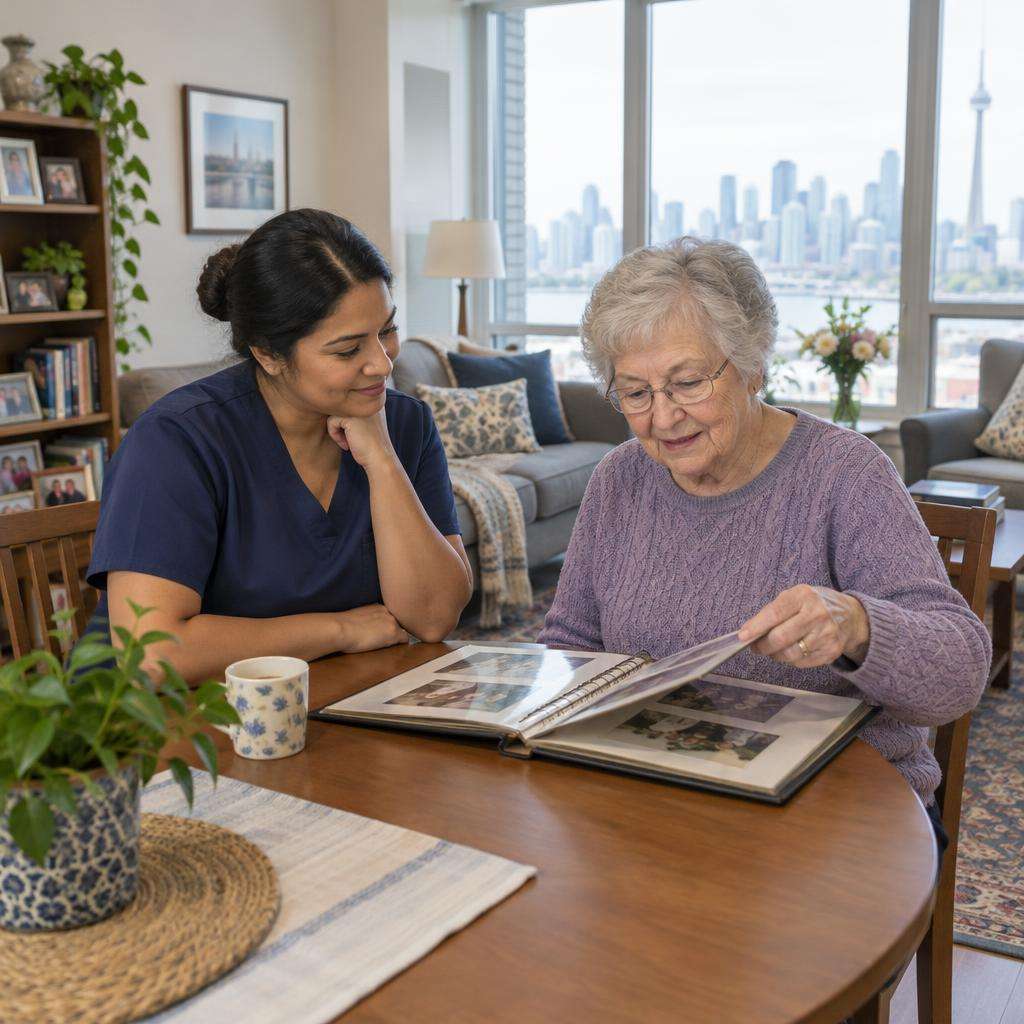
- Companionship through conversation, music, photos, puzzles or favourite activities
- Providing family caregivers with planned respite time
For example, a parent may become anxious during the morning rush of getting dressed and preparing breakfast. Rather than trying to complete every task quickly, a PSW can use a steady routine: laying out familiar clothing, offering one simple choice at a time and allowing extra time for breakfast. The goal is not to rush or correct the person, but to provide respectful support through the routine.
PSWs do not diagnose dementia, provide medical treatment or replace regulated healthcare professionals. Families should continue to direct medical concerns, sudden changes in condition or medication questions to the appropriate healthcare provider.
Why familiar routines matter at home
Home can offer familiar surroundings, meaningful belongings and established daily patterns. In Toronto, this may mean remaining in a long-time family house, a condominium apartment or a rental home close to familiar shops, neighbours or relatives.
A predictable visit schedule can be especially helpful. If a PSW arrives at a similar time for morning care, lunch support or an afternoon activity, the routine may become easier for the client to recognize over time.
Start with the routines that are already working
Before arranging care, make a short list of the activities your parent still enjoys or completes successfully. This might include listening to a favourite radio program, having tea at a particular time, folding laundry, watering plants or taking a short walk in the building corridor.
These details help a caregiver support the person as an individual rather than focusing only on tasks. For instance, if your parent has always preferred a quiet morning and becomes frustrated by too much conversation, that preference should be part of the care plan.
How private dementia care can support family caregivers
Dementia care often involves many small responsibilities that add up: checking in, making meals, helping with hygiene, organizing the day and ensuring a loved one is not isolated. Adult children may be balancing this work with jobs, children and travel across Toronto.
Private home care can be scheduled around the times that are most difficult for the family. Some families begin with a few regular daytime visits each week. Others need support during a particular routine, such as morning personal care or evening meal preparation.
Respite can also give family caregivers time to attend their own appointments, complete errands or rest. A planned break is not stepping away from care; it is one way to make caregiving more sustainable.
A practical example: planning an afternoon visit
Consider a family whose father is comfortable in the morning but becomes restless later in the day. His daughter usually leaves work early to check on him, prepare a meal and stay until he settles for the evening.
A private PSW visit could be planned for that afternoon window. The caregiver might prepare a snack, spend time with him doing a familiar activity, assist with a change of clothes if needed and prepare a simple supper. The daughter remains involved, but no longer has to manage every difficult afternoon alone.
What should families share with a dementia caregiver?
Clear information helps a PSW provide more personalized support from the start. Families do not need a complicated document, but a concise care overview can be valuable.
Include practical details such as:
- Your parent’s preferred name and communication style
- Usual wake-up, meal and rest times
- Food preferences, dislikes and cultural routines
- Activities that are comforting or enjoyable
- Situations that may cause frustration or anxiety
- Mobility needs and the layout of the home
- Family contact information and instructions for sharing updates
In a Toronto condo, for example, families may want to explain the building entry process, elevator access and where essential items are kept. In a house, it may be helpful to identify stairs, frequently used rooms and the preferred entrance during winter weather. These practical details support a smoother, more respectful visit.
Questions to ask when choosing dementia home care in Toronto
Choosing a provider is an important decision. Ask direct questions about how care will be planned and how the provider approaches consistency and communication.
- How do you learn about a client’s routines, preferences and care needs?
- Can care visits be scheduled around the times our family needs support most?
- How are family updates handled?
- How do caregivers approach personal care when a client is hesitant or distressed?
- What happens if our parent’s needs change over time?
- How do you distinguish non-medical personal support from medical or nursing care?
Look for answers that are practical and individualized. Dementia affects each person differently, so care should not be treated as a one-size-fits-all service.
When is it time to explore additional support?
Families often seek help after a difficult moment, but support can also be introduced before caregiving becomes overwhelming. It may be time to explore private care if personal care routines are becoming hard to manage, a parent is spending long periods alone, family caregivers are missing work regularly or everyday responsibilities are creating ongoing stress.
Starting with a modest schedule can help a parent become familiar with receiving support while giving the family a clearer picture of what is useful. Care needs can then be reviewed as circumstances change.
Private dementia support for Toronto families
Living with dementia does not mean every routine must disappear. Thoughtful, non-medical assistance can help a person continue participating in familiar parts of daily life while giving family caregivers dependable support.
Trinity Homecare Services provides personalized senior care in Toronto, including non-medical personal support, companionship and respite care. To discuss private dementia home care for your family, call Trinity Homecare Services at 437-313-4001.
