
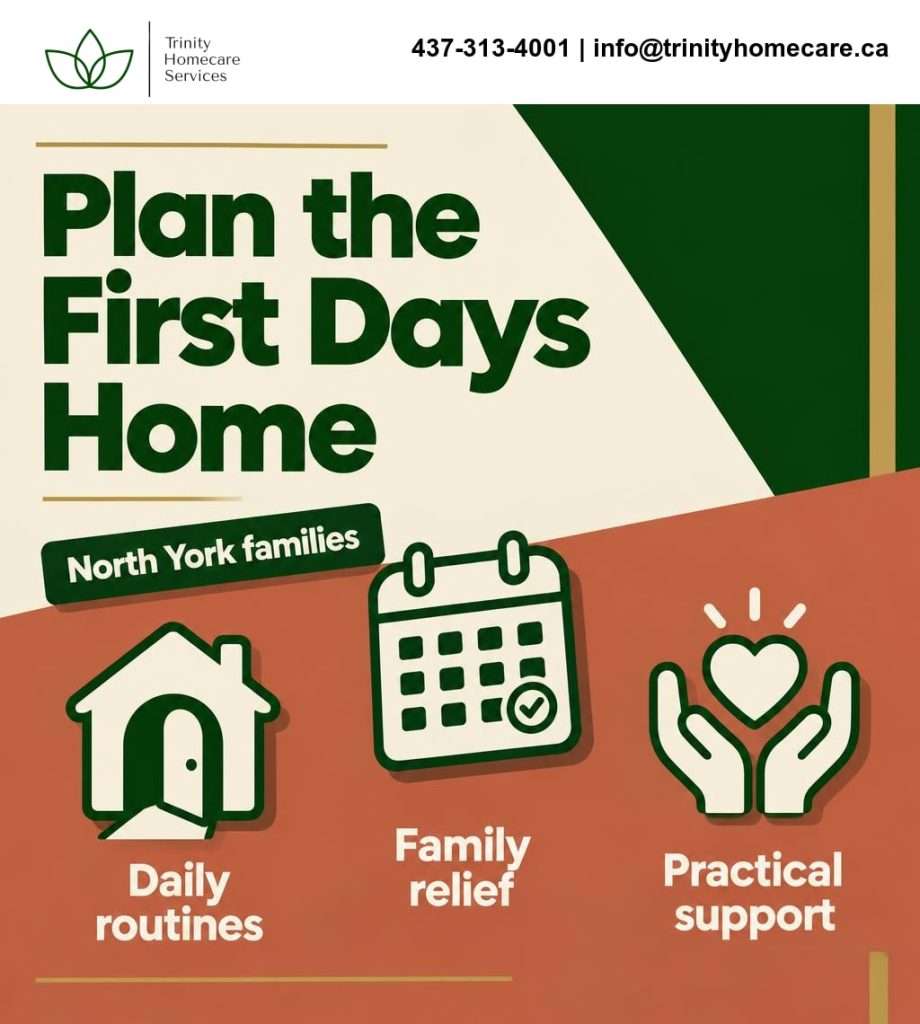
Coming home from hospital can be a welcome milestone, but it can also create a busy and uncertain period for seniors and their families. There may be new routines to manage, mobility concerns to consider, appointments to attend and everyday tasks that suddenly feel more demanding.
For families looking for home care after hospital discharge in North York, the goal is often practical: helping a loved one settle safely and comfortably into daily life at home while family members regain some structure and support.
Private, non-medical home care can be a helpful complement to instructions from a hospital discharge team and any regulated healthcare services that may be arranged. A PSW can assist with daily routines, personal care, meal preparation, companionship and household support based on the individual’s needs and care plan.
Why the first days at home can feel overwhelming
A hospital stay can interrupt familiar routines. Even a person who was previously independent may feel tired, less steady on their feet or unsure about managing everyday tasks right away. Family members may also be balancing work, school, travel across North York and their own household responsibilities.
The first week is often when practical details become most visible. Families may need to think about:
- Who will be present when the senior first returns home
- How meals, hydration and personal routines will be managed
- Whether the home is organized to reduce unnecessary strain or clutter
- How appointments and errands will be handled
- What support family caregivers can realistically provide each day
Planning ahead does not mean assuming the worst. It gives everyone a clearer understanding of what help may be useful and where family members may need relief.
What non-medical PSW support can look like after discharge
Home care is flexible. Some North York families need a few hours of support during the transition home, while others require more consistent assistance as routines are re-established. The right schedule depends on the person’s daily needs, living situation and available family support.
Personal care and morning or evening routines
After a hospital stay, tasks such as bathing, dressing, grooming and getting ready for the day may take more energy. A PSW can provide respectful assistance with personal care and help create a calmer, more manageable routine.
Meal preparation and light household help
Having nourishing meals available can make the first days at home easier. Non-medical caregivers may help prepare simple meals, tidy commonly used spaces, manage light laundry and keep essential items within easier reach.
Companionship and routine support
A return home can feel isolating, particularly for a senior who lives alone. Companionship can provide conversation, reassurance and a steady presence while someone gets reacquainted with their usual home environment. Caregivers can also support simple routines such as taking a walk in the home or building, enjoying a meal, or preparing for a planned outing.
Family caregiver relief
Adult children and spouses often take on many responsibilities immediately after discharge. Scheduled care can give family caregivers time to work, rest, handle errands or focus on other responsibilities while knowing their loved one has attentive non-medical support.
Questions to ask before arranging home care
A helpful care plan starts with a practical conversation. Before choosing a provider, it can be useful to identify what the first few days and weeks are likely to require.
Consider asking:
- Which daily activities does my loved one currently need help with?
- What times of day are most difficult?
- Will a family member be available, and where are the gaps in support?
- Are there mobility or home-layout concerns that should be discussed?
- What routines are important to preserve?
- What information should a caregiver know to provide respectful, consistent support?
It is also wise to clarify the scope of care. Trinity Homecare Services provides non-medical support and does not replace medical advice, treatment or regulated healthcare services. Questions about medical instructions, symptoms or clinical care should be directed to the appropriate healthcare professional or discharge team.
Preparing the home before your loved one arrives
Small preparations can make the transition feel less hectic. Families do not need to redesign an entire home, but it can help to focus on the areas used most often.
Try to ensure that pathways are clear, frequently used items are easy to reach and the kitchen has simple food options available. A comfortable resting area, charged phone and a written family contact list can also make the first day home more organized. If there are instructions from the hospital or another care provider, keep them accessible for the family members coordinating support.
For many North York households, coordinating care around traffic, work schedules and family commitments can be part of the challenge. Establishing a predictable support schedule early can reduce last-minute decisions and help everyone understand their role.
Choosing a private home-care provider in North York
Families are often looking for more than task support. They want a caregiver who listens, treats their loved one with dignity and understands that the transition home can be emotional for the entire family.
When comparing providers, ask how they learn about a client’s preferences, how care schedules are planned and how families can communicate changing needs. Look for clear information about the services offered, the role of the PSW and how the provider approaches consistency and respectful care.
If your family is also exploring longer-term support options, visit Trinity’s senior care services in North York page to learn more about available non-medical home-care support. You can also explore Trinity’s Ontario home-care services for broader information about care across the province.
A supported transition home
The days after a hospital discharge can be a time of adjustment, not a time when families should feel they need to manage everything alone. Thoughtful non-medical support can help a senior maintain familiar routines, assist family caregivers and make the return home feel more manageable.
If you are arranging home care after hospital discharge in North York, Trinity Homecare Services can discuss your family’s non-medical support needs. Call 437-313-4001 to learn more about arranging compassionate PSW care for your loved one at home.
