
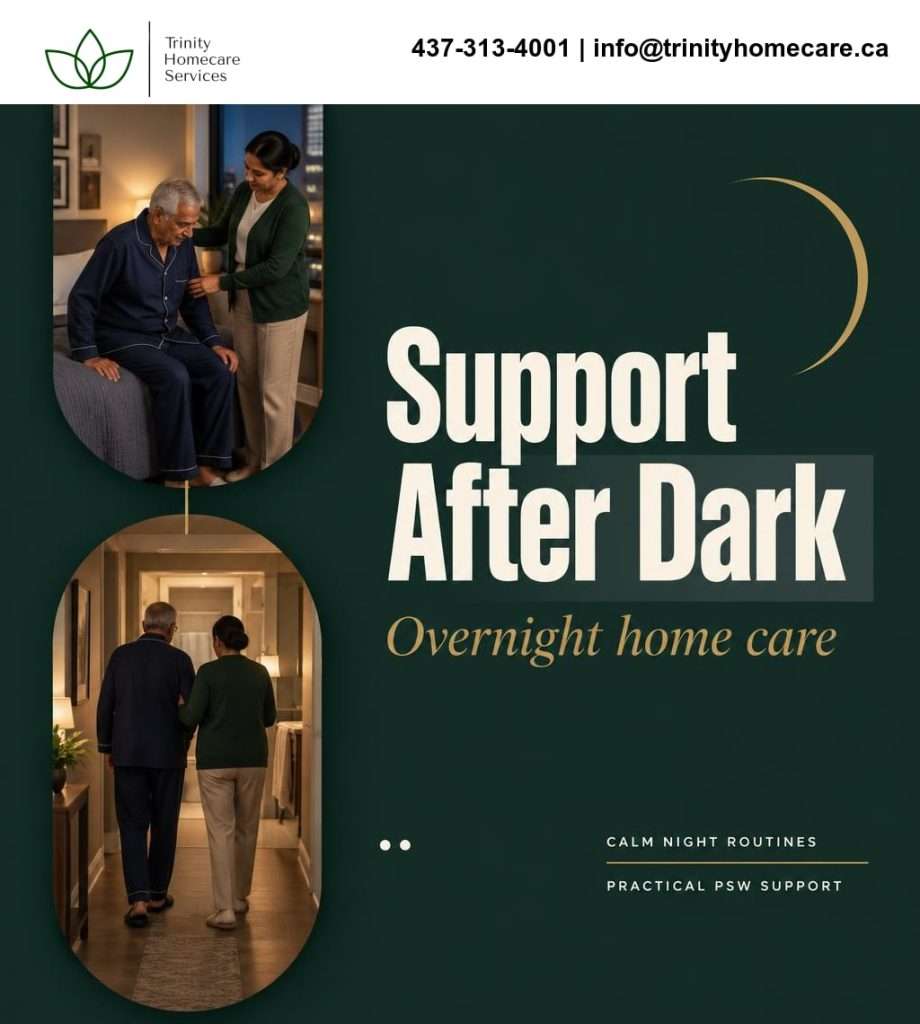
For many North York families, the hardest part of supporting an older relative happens after the household has gone to bed. A senior may feel unsteady walking to the bathroom, become confused after waking, need reminders during the night, or simply feel anxious being alone. Family caregivers may also be losing sleep because they are listening for a call, a fall, or movement elsewhere in the home.
Overnight care in North York can provide practical, non-medical support during those hours. It is designed around the person’s established routines, needs, home environment and family concerns. For some households, a regular overnight plan can make it more manageable for a senior to remain at home while allowing relatives to rest.
What is overnight home care?
Overnight home care involves a trained PSW or caregiver being present in the home during agreed overnight hours. The type of support can vary considerably. Some clients need a caregiver who is available to assist if required, while others need more active help throughout the night.
A care plan should be based on a conversation about what typically happens overnight. This may include sleep patterns, mobility concerns, toileting routines, evening anxiety, memory changes, and how much support the family is currently providing.
Trinity Homecare Services provides non-medical home-care support. A PSW can assist with daily living needs and follow an agreed routine, but overnight home care does not replace emergency services, medical treatment, nursing care, or advice from a regulated healthcare professional.
Signs a family may benefit from overnight support
Needing help at night does not necessarily mean an older adult can no longer live at home. It may mean the household needs a more reliable plan for a particular part of the day.
Families in North York often begin exploring overnight support after noticing one or more recurring concerns:
- Frequent trips to the bathroom and worry about falls or unsteadiness
- Difficulty getting in or out of bed safely
- Night-time confusion, disorientation or wandering related to memory changes
- Anxiety or fear after dark
- A spouse or adult child who is no longer getting sufficient sleep
- A recent change in mobility or confidence at home
- A family caregiver who lives elsewhere and cannot reliably stay overnight
- A need for help maintaining a calm evening and morning routine
One challenging night may not call for ongoing care. A pattern of disrupted sleep, safety concerns, or caregiver exhaustion is often a good reason to discuss options.
What can a PSW help with overnight?
The support provided should always reflect the individual’s needs and preferences. In a typical non-medical overnight care plan, a PSW may help with:
- Assistance with safe transfers, such as getting in and out of bed
- Support with toileting and personal care routines
- Mobility assistance within the home, including accompaniment to the bathroom
- Preparing for bed and supporting a comfortable morning routine
- Gentle reassurance for a person who wakes feeling confused or unsettled
- Companionship during periods of wakefulness
- Light household tasks connected to the client’s immediate routine
- Communication with family about relevant observations from the shift
Before arranging care, families should be clear about the specific assistance required. For example, someone who needs occasional reassurance has different needs from someone who requires frequent hands-on support through the night.
Overnight care and dementia-related night-time changes
Some people living with dementia or other memory changes experience more confusion, restlessness or anxiety in the evening and overnight. A familiar environment, a consistent routine and calm communication may be helpful elements of a home-care plan.
For family members, these hours can be particularly demanding. An older adult may wake and believe it is time to start the day, look for a spouse, or become distressed in an unfamiliar-feeling moment. A compassionate PSW can provide companionship and routine-based support while helping the household respond more calmly.
Families should speak with an appropriate healthcare professional about new, sudden or concerning changes in cognition, behaviour, pain, breathing, mobility, or overall health. Home care can complement a family’s support plan, but it is not a substitute for clinical assessment.
Why overnight support can matter in a North York home
North York includes a wide range of living arrangements, from condominium apartments to multi-level family homes. Night-time challenges can look different in each setting. A bathroom may be close to the bedroom but still difficult to reach safely in low light. A senior may manage stairs during the day but feel less steady when tired. In a condo, an adult child may worry about a parent being alone overnight even when they live nearby.
A thoughtful overnight plan focuses on the home as it is actually used. Families can consider practical details such as clear walking routes, reachable lighting, the location of mobility aids, footwear, bedroom comfort and how the senior prefers to ask for help. These simple discussions can help a caregiver provide more consistent support.
Questions to ask before choosing overnight home care
Choosing a provider is about more than filling a shift. Families should look for clear communication and a service plan that respects the client’s routine and dignity.
Ask about the care plan
How will the provider learn about the senior’s usual evening, overnight and morning routines? How are mobility needs, personal preferences and family instructions documented? A clear plan helps make care more consistent.
Clarify the level of overnight support
Ask what the caregiver’s role will be during the shift and how the schedule is structured. Explain whether the senior may need active support several times overnight or whether the primary need is presence and reassurance.
Discuss communication with family
Families should understand how relevant updates are shared and who to contact if needs change. Good communication is particularly important when several relatives are helping coordinate care.
Be open about changing needs
Home-care needs can evolve. A plan that works after a difficult week may need adjustment later. It is helpful to review the arrangement regularly and discuss any new safety concerns promptly.
Supporting the family caregiver, too
Sleep disruption can affect a caregiver’s concentration, mood, work and ability to provide care over time. Many adult children and spouses delay asking for help because they feel they should be able to manage everything themselves. In practice, dependable support for a few nights or on a regular schedule may help prevent burnout.
Overnight care can also give family members the chance to remain involved in the ways that matter most to them: sharing meals, attending appointments, visiting, and making decisions together. Practical help does not replace family connection. It can create more room for it.
Creating a more sustainable plan at home
Families considering overnight care may also benefit from reviewing their broader support routine. Daytime companionship, personal care assistance or respite support can sometimes reduce pressure before night-time becomes overwhelming. Trinity can help families explore home care options in North York and consider a schedule that fits their household.
For Ontario families, it is also useful to remember that a PSW’s role in private home care is centred on non-medical daily living support. If a senior’s needs involve medical concerns, new symptoms, or a clinical change, the family should seek guidance from the appropriate healthcare professional.
Talk with Trinity about overnight care in North York
If nights have become stressful for your family, a conversation can be a practical first step. Trinity Homecare Services can discuss your loved one’s routines, the kind of non-medical support that may be appropriate, and how a PSW may help create a more manageable overnight plan at home.
To learn more about overnight home care in North York, call Trinity Homecare Services at 437-313-4001.
